The aim of the RBDCOV project, through a collaborative consortium partnership between the biotech company HIPRA and different European clinical research and health centres, among others, was to assess the efficacy, tolerability and safety of the BIMERVAX® vaccine in certain populations who are at higher risk of severe COVID-19 due to health conditions that compromise their immune system.
The vaccine immunogenicity: the ability of the vaccine to elicit an immune response
To evaluate efficacy, research laboratories from IRSICaixa and IDIBAPS have monitored the ability of the vaccine to elicit both humoral (antibody-induced) and cellular immune responses over the follow-up period of the BIMERVAX® trials.
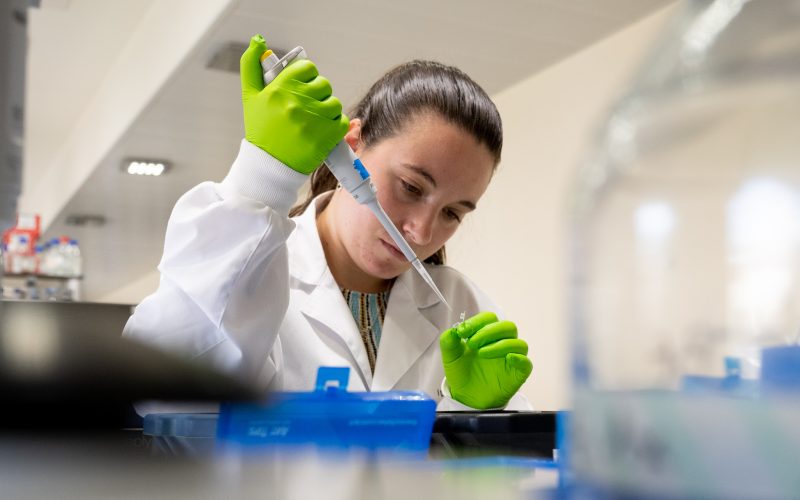
In fact, IDIBAPS has focused on analyzing T-cell responses by using a technique called Intracellular Cytokine Assay (ICS). This involves measuring the activity of two types of T cells, CD4 and CD8, by looking at their production of specific proteins, mainly interferon-gamma (IFN-γ) and interleukin-2 (IL-2). They do this by stimulating the T cells with synthetic peptides that represent parts of the virus from the original Wuhan strain and other variants, covering the entire Receptor Binding Domain (RBD).
IDIBAPS will characterise the vaccine immunogenicity (the ability of the vaccine to elicit an immune response) from all the populations included in the clinical trials planned in the RBDCOV project.
Although vaccination generally elicits robust antibody and cellular immune responses against many pathogens (infectious agents), it is known that the vaccine does not always trigger an adequate response in everyone’s immune systems. Understanding the observed variability in vaccine immune response in individuals with compromised immune systems can be extremely relevant to achieving a protective effect.
The BIMERVAX® vaccine was tested in adults with immunocompromising conditions
In the first RBDCOV clinical trial (HH-4) the BIMERVAX® vaccine was tested in adults with immunocompromising conditions, which may have led to a reduced response from the vaccine. This study involved 240 participants, including individuals who have received a kidney transplant or have chronic kidney disease, people on a dialysis programme, people living with primary immunodeficiencies, people living with HIV with a CD4 count less than 400 and individuals with an autoimmune disease undergoing treatment with rituximab (a medication used to treat certain autoimmune diseases and blood cancer) or ocrelizumab (is a medication used for the treatment of multiple sclerosis (MS).
IDIBAPS has been supporting Hospital Clínic (HCB) in the recruitment and monitoring of participants for this clinical trial, as well as analysing cellular immune responses. The results indicate that the BIMERVAX® booster was able to expand specific T-cells, mainly IFN-γ+ CD4+ T cells, against most of the SARS-CoV-2 RBD variants tested in participants living with HIV, kidney disease on haemodialysis program, primary antibody deficiency disorders on immunoglobulin replacement therapy and autoimmune disease on treatment with rituximab/ocrelizumab. This outcome mirrors previous trials including individuals without immunocompromising health conditions. However, this response was not observed in participants with a history of previous kidney transplant.
Moreover, in the HH-3 trial, which focused on the safety and immune response of BIMERVAX® booster dose in adolescents aged 12 to under 18, IDIBAPS was also in charge of monitoring cellular immunity in a subgroup of adolescents. While final analysis of the cellular immunity assays is ongoing, preliminary results observed in adolescents are positive and likely to be comparable to those expected in children under 12, a subgroup that will be recruited for the upcoming HH-6 clinical trial.
About IDIBAPS
IDIBAPS has a broad experience in the development of national and international multi-centre clinical trials in different areas of research also including vaccine development and has participated in several clinical trials at different phases for COVID-19 as well as HIV treatment and prevention field. In addition, IDIBAPS has also participated in the preclinical stages of other vaccines against viruses, leading the development of dendritic cells-based vaccines and mRNA vaccines towards achieving a functional cure for HIV-1 infection. They have also coordinated the development of an mRNA vaccine for COVID-19 and play a key role in conducting cellular immunogenicity assays used to monitor vaccine efficacy.
This specialised article was authored by Montserrat Plana from the IDIBAPS Team.